The Chicago Marathon is in a little over two months (61 days to be exact). I have several friends planning to run it, which means that they are currently in training. Most follow a training plan, which maps out when and how far to run. Their training schedule dictates not only mileage but when to rest, when to do speed workouts. When to do cross training, and when to do long runs.

If you want to run a marathon, or accomplish any other task of similar significance, you can’t do it by just “trying.” If you’ve never run a mile, you can’t just go out to Grant Park on October 12 and just try very hard to run 26.2 miles around the city. You’ll most likely fail or at the very least, hurt yourself.
If, like my running buddies, you build a habit of running, and train your body to get stronger over time—you very likely could run a marathon.
As John Ortberg once said, transformation does not come from trying, but from training. As he wrote in his book The Life You’ve Always Wanted:
Respecting the distinction between training and merely trying is the key to transformation in every aspect of life. People sometimes think that learning how to play Bach at the keyboard by spending years practicing scales and chord progressions is the “hard” way. The truth is the other way around. Spending years practicing scales is the easy way to learn to play Bach. Imagine sitting down at a grand piano in front of a packed concert hall and having never practiced a moment in your life. That’s the hard way.
My running pals are currently preparing to “run Chicago” the easy way—by training. When I train for races, I put in the miles, week by week, so that by race day, I have confidence and strength to accomplish what I set out to do.
Writing is much the same. Often people want to hop off the couch, metaphorically speaking, and write a book. But they’ve done no training.
I often talk to people who tell me they want to write a book. I ask them what they have written so far, or what their writing experience has been. What are they writing now? What have they written?
They sometimes look confused. Or sheepish. “Well, I haven’t really written much, but people always tell me I should write a book.”
Let me tell you a little secret. If you have a compelling or especially a difficult story, and you share it with, say, friends or strangers in conversation, they might respond, “Wow. That’s quite a story. You should write a book.”
This might feel like a divine calling. It is not.
People often say “you should write a book” because they frankly don’t know what else to say. Their motives are good—they want to acknowledge your story. But they don’t want to hear more about it at that moment. “You should write a book” is actually just a way to change the subject.
If the person saying “you should write a book” is not actually a writer who has written a book, then it is much akin to a couch potato telling you, “you should run a marathon.” They have no idea what’s involved—the months of work, the money you’ll need to invest, the struggle of it. They don’t know what it means to train as a writer.
It might be true that you should write a book. But if it is, you need to begin with training.
When I wrote my first book, I was 34. I’d been writing professionally for more than a decade by that point. I’d majored in English, served as the editor of the student newspaper in college. I’d worked as a reporter for a daily newspaper for seven years. That often meant writing six or seven articles per day, five days a week. I’d written hundreds of articles for magazines and websites. And I’d had editors reading, critiquing and correcting my work along the way. In other words I’d been training and being coached for a long time. I’d written a lot of words.
Still, writing a book was a bit different, and I had a lot to learn. I read a lot of books about writing, and wrote numerous drafts. The book finally got published two years later.
About a month ago, I wrote this post, which asked “Are you called to write?”
If you answered yes to that question, your next question might be, “now what?” You might mistakenly think you should sprint out the door and write a book.
Think back to our marathon analogy. If your normal activity levels includes only getting up from the couch to walk to the kitchen, then your next step is to slowly begin training by walking more, then eventually jogging. A little at a time. Consistently.
If you already are a recreational runner, you might just have to find a training plan and stick to it, gradually building up your mileage and aerobic capacity. Again, consistently. No matter where you’re starting, training is about consistency.
If you’re new to writing, don’t start with a book. Start building a writing habit with morning pages, the writerly equivalent of the first few blocks of a morning jog—you’re just warming up.
Morning pages, made famous by author Julia Cameron in her book The Artist’s Way, are a helpful training exercise to get writers unblocked and in touch with their creativity. First thing in the morning, pull out a journal or some looseleaf notebook paper. Just sit and write whatever comes to mind, longhand, for two or three pages. Just get your hand moving across the page. Don’t self-edit, don’t self-judge. Just write and let ideas flow.

Photo by MART PRODUCTION: https://www.pexels.com/
Build this as a consistent habit. You’ll find your desire to write will grow. Then, you might consider blogging or starting a Substack. Do it consistently—that’s what training looks like.
If you are part of a church, civic organization, club, whatever—volunteer to help write for their newsletter. This is a great place to practice writing.
Write a letter to the editor of your local paper. Ask to write a guest post on a friend’s blog or newsletter.
Read books about writing. Take a writing class at your local community college. Attend a writers conference. Join a critique group.
After several months of training, you can create a folder on your computer. Label it, “My book.” Start putting quotes, ideas, snippets, whatever, into that folder. If you want, try writing 1000 words on the topic you think you might someday write a book about.
If you want to write, feel called to write—then write. But think of everything you write not as a masterpiece or a marathon. Think of your writing as training. Who knows where that training will take you?
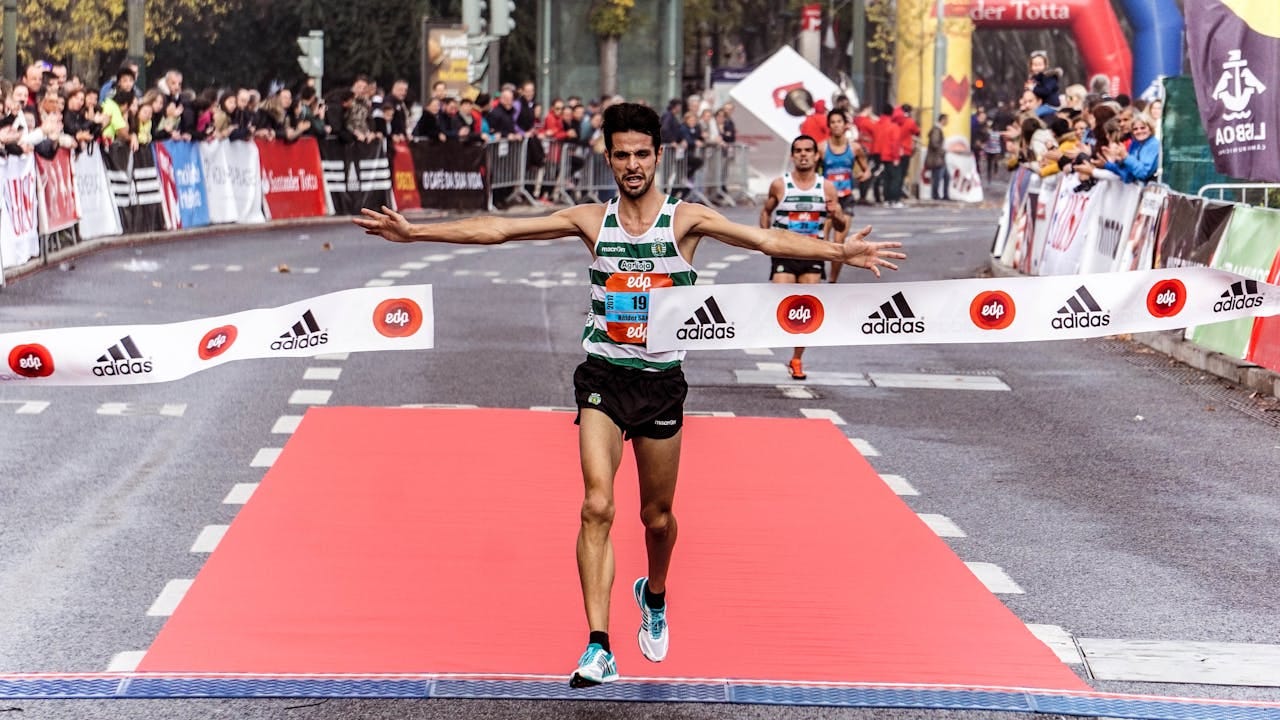
Photo by RUN 4 FFWPU: https://www.pexels.com/
P.S. This post originally ran in the Powerful Story newsletter on Substack. Subscribe for free here.